


The problem🪞
50% of every euro earned disappears into the state's pockets. More than 200 joint committees deciding on labour conditions between sectoral Chinese walls. Two out of three Belgians don't understand their own payslip.
Read that again.
These aren't footnotes. This is the reality of 4 million working Belgians.
The salary system is broken. Payroll engines date back to the eighties, older than the HR managers forced to work with them. For decades, collective benefits have been the go-to answer to sky-high taxes on labour. The result? A system that's both incomprehensible and absurdly expensive. Do you know what your group insurance is actually worth? Neither do we.
And somewhere in an office in this country, an HR professional is burning through an entire day manually checking payslips and fielding employee questions about things that should explain themselves.
Salary is the most powerful financial instrument in most people's lives. And we've collectively stopped engaging with it.
The shift 🧬
Unless you've been living under a rock, you know AI is turning businesses upside down. HR is no exception. Job descriptions, CV screenings, onboarding plans, the administrative side of the HR job, handled in a set of single prompts. The result? HR can finally focus on people and culture. The only winning strategy for every single company. AI or not.
But here's the part most people miss: that same force can finally crack the one strategic topic HR has been stuck on for decades. Salaries.
Gone are the days where compliance and correct pay were the monthly scoreboard of a successful HR department. Salary administration should become a job of the past, paving the way for compensation & benefits as a new strategic HR discipline. Our assumption is bold but simple: every payroll professional in Belgium will evolve into a comp & ben specialist within the next five years. Focused on incentivisation, communication, and business growth.
It's time to make salaries work.
What it looks like when it actually works 🔮
The future of salaries will be dominated by all-in-one salary platforms. Solutions sitting at the intersection of two things that have been broken for too long: literacy for employees, and bandwidth for HR teams.
Let us paint the picture of what we're building at Payflip.
→ For employees One app. Everything about your salary in one place: From an initial offer to personalised benefits, from payslips to wealth advice. A single card for meal vouchers and mobility. And an assistant that answers the questions that actually keep you up at night: Why did I earn less this month? What if I go to 4/5? How much will I earn during parental leave?
No more guessing. No more digging through PDFs. Just clarity. So every working Belgian can finally understand, and start building, personal wealth.
→ For HR teams Payroll that runs itself. AI that catches anomalies before you do. Data that flows seamlessly between all your HR tools. Not so you can do more admin faster, so you can stop doing it altogether. The mental space to do what you got into HR for: building a people experience that actually moves the needle, aligned with where the business is going.
The starting gun 🏎️
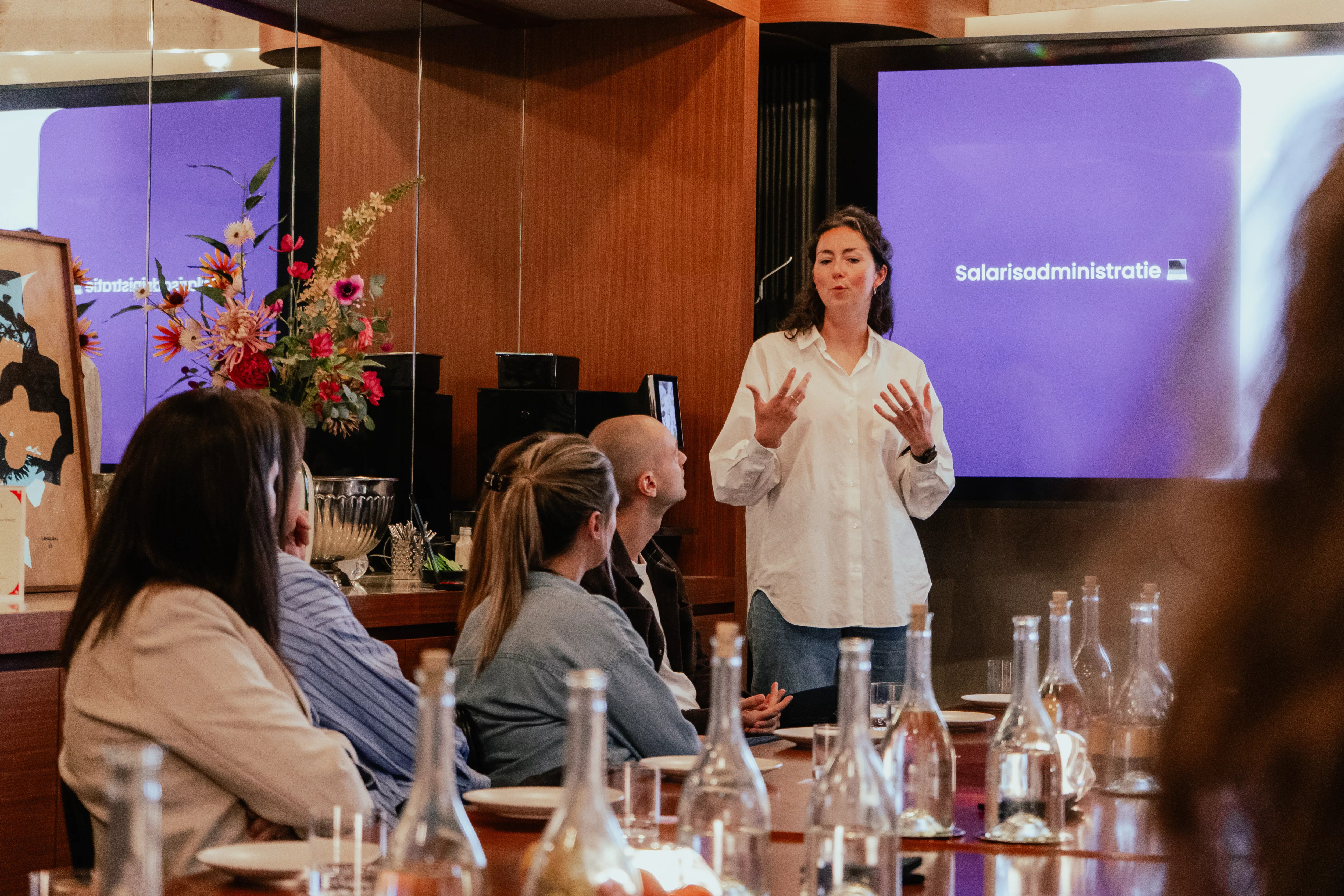
March 17th. Wintercircus, Ghent. The cream of Belgian HR in one room. No PowerPoint marathon. People who know things need to change and who want to help steer.
The challenges sounded familiar. SMEs losing talent. HR teams drowning in admin while the people agenda gathers dust. But the energy in that room? That was the energy of progress.
The conclusion was unanimous: Belgium needs a new salary experience. The hunger to build it together wasn't subtle. It was palpable.

The system is old. The tools are slow. The status quo is comfortable for those who benefit from the complexity.
But 4 million working Belgians? They deserve better.
Literally.
Stay tuned. 👀
Brought to you by